
About
The scripts were written, but no animation studio wanted to bite. The screenwriter was an unknown, who insisted that every licensed intellectual property mentioned and seen or heard in the story just had to be included, because they were vital to its universe. The costs would have been insane. So, the writer had to shelve his dream of making an animated show, at least for the time being, and instead translate his scripts to serialized novel form—while still making the show still feel like a cartoon.
But that was okay, on paper both real and digital, the odds of getting sued for just using words and no visuals should be pretty low, right? And that means total freedom, to explore the 1990s in full. Movies, shows, music, historic events—everything gets a mention. Some of it advances the plot. All of it shapes the characters. After all, are we not raised in part by the media we grow up with? MTV, Nickelodeon, Nintendo, Sega, Windows or Macintosh, and yes, even the early internet.
Still, this is a story that’s more than just about culture. It wants to say something about a certain generation of kids who grew up in a certain decade and are now poised to take over the world. Is it totally realistic? Not really. Is Royal Valley, the fictional city in which the story is set, one giant playground for a hundred kingdoms of kids just waiting to go out and have squirt gun fights and repeat the latest zingers from their favorite TV shows? Yeah, it’s closer to that. Let’s talk about it over a slice, okay?
The 90’s Kid begins in 2020, when a 35 year old former, well, 90s kid discovers a time portal in his apartment’s pantry door. Fed up and bored with contemporary times, he goes in and emerges in July 1995. After spending some time in his beloved past and watching his younger self and his gang of friends live through 5th grade, our “hero” Wes returns to the present—but not for long. He’s got plans to improve his adult life by rectifying a few mistakes made in the past and setting a better course for himself that he hopes will end up giving him a better outlook. To do that, he enlists the help of his eleven year-old recent elementary school graduate, Jace, a kid obsessed with his smart phone, social media, and online video games.
They arrive in summer, with Wes assuring Jace that it’s just a “quick weekend getaway,” showing off the mall and his old movie theater among other places. Little does the kid know that his uncle has far schemier plans in the works, that will take him all across the desert city of Royal Valley—and beyond. This is a story about the simple and the complex, from trying to fit in with a fifth-graders, playing with water guns in the neighborhood, and visiting an amusement park, to trying to avoid paradoxes and running from the mysterious, dangerous time-related entities that seem to be chasing the duo around.
But, hey, if Wes could master the Toys ‘R’ Us Toy Run and conquer childhood when he was young, surely he and his mind full of pop culture trivia will help get the two out of any bad situation, like the possible collapse of spacetime. If it’s all to prevent a crummy adulthood, it’s worth the risk.
In-Depth Time-Primer
Safe to read before or during the story, an article about inspirations and thought processes.
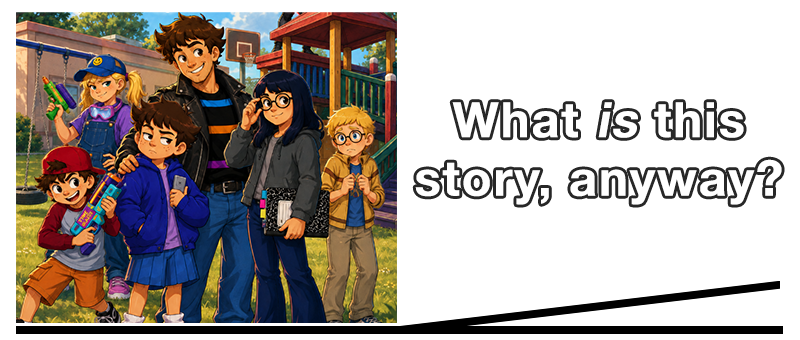
A better question might be, what isn’t it? Fun time travel adventure, shoutout to a generation, spiritual journey, an uncle regaling his childhood, visiting a living snapshot, taking the best interactive history museum tour ever… All of these descriptors work, as the series turns the past into its own story-telling universe. It transforms a desert valley city, and a suburban neighborhood in particular, into a slice of life saga that swings between highs and lows, small moments and big ones—while making those little things feel meaningful, too.
The 90’s Kid, like life, is a rollercoaster ride. Which is appropriate, given that the “coolest” place of all and the big set piece I always look forward to revisiting as much as some people can’t wait to attend a real-life theme park, has a few coasters of its own. As you go into the series, I’d recommend coming in with no expectations, and to just enjoy the ride. Let the safety vest lock you into place, and hold on tight. For the most part, it’s a smooth trip. But there will be some steep climbs, sudden drops, a loop, twists and turns, and plenty of easy riding between them.
You’ll never know what’s coming next, because the lingering tension is real in the series, and it might pop at any second. After you’ve read one of those purely slice of life chapters about childhood bliss and nothing bad happened, though? Go ahead and reread it to your heart’s content. Like Wes says, “the past is safe.” Embrace the slow-down and the soft, carefree moments. They don’t last.
Here’s the story past the blurb. Wes is suffering from a crippling sense of nostalgia, and his ego isn’t much better. He doesn’t see much in 2020 worth sticking around for, so even after spending a year in the past, he comes back more than ready to do it all again. Only this time, he’s bringing his nephew Jace, son of half-sister Lucy. He always believed the father they shared preferred her. But he doesn’t have anything against her, and in fact, she may be one of the few people worth sticking around for.
But nothing is what it seems in Wes’ life. Not his present, his future, or even his past. As you’ll slowly find out, he’s just one cog in a much bigger machine, and in a mystery that began a while ago by “universal time” standards; that is, the unstoppable flow of time ticking ever forward even when people are traveling. The fictional city of Royal Valley itself holds many secrets, and more than just the usual kind simply brought about by 80,000 lives all living, working, and mingling together. One class at a time, though.
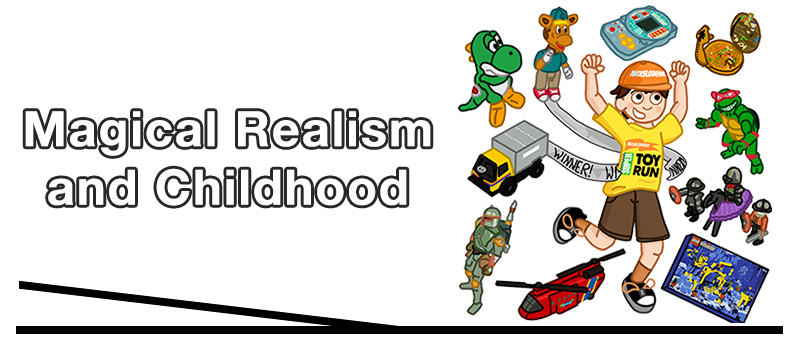
Something to know early on is that the series does not place in a world like our own, but rather a close parallel. Close enough that the vast majority of popular media, especially including TV shows, video games, and movies, have made their way over there, and allows the story to exist in a state of semi-metaness where commentary on hundreds of other stories can exist as a frequent subject of discussion, whether at the schoolyard or as the topic of one of Wes’ rants about the beauty that results from people coming together to work on a project, just once, before going their separate ways.
A thought recently occurred to me while responding to comments in the story’s RoyalRoad comments section. I’d always visualized and imagined The 90’s Kid as an animated series. That’s how I see it in my head, and that’s why its cast of characters act and speak in slightly exaggerated ways, and why the action sequences feel a little “floaty” and “safer” than they would in a more realistic universe. The thought was that if the series actually was turned into the show that never got produced, what if the scenes in 2020 were live action? Yes, similar to The Wizard of Oz. Only, instead of going into technicolor, the two emerge into a hand-drawn apartment kitchen, and they’re cartoon characters.
They don’t acknowledge it; it’s purely a stylistic change-up. But it would fit so well with Wes’ worldview. And he isn’t even actually all that incorrect.
Truth is, The 90’s Kid, at least in its 1990s sections, actually does take place in a Saturday morning kids show style reality. Has it faded by 2020? At least mostly. Could it be brought back? Well, that depends on if the optimism and lifestyle the children of the 1990s knew could be recreated and revived. Something was lost over the years, and while it’s likely gone forever, at least it can be revisited in the story and, perhaps, a fragment of what once was can be brought back. Granted, this could all just be an extension of Wes’ frame of mind and needn’t be taken literally. He saw his world as a “Kingdom of Kids,” and it was something he could understand and felt a part of. Now he sees the castles as empty, forgotten, and dusty liminal spaces that exist only in the recesses of memory.
If I had millions of dollars to finance an actual production of the series, it would probably be all animated. But the Oz treatment could work, as well.
Because the population of kids in the 90s seem to live in such a world, they’re a little smarter than we’re used to, and speak with more eloquence and possess a bigger vocabulary. They have structured societies and expectations. They value word of mouth stories, “epic moments,” and urban legends. This is all intentional, and atypical of how I present children in my other stories.
Magical realism brings a coat of dreamlike or fantastical qualities to otherwise ordinary life, by hyping up, romanticizing, and mythologizing people, events, places, and memories—turning them more into how we remember the past in our minds, where we tend to see moments as something greater than they actually were. In that way, maybe The 90’s Kid is told from Wes’ thoughts and perspective, and doesn’t actually represent reality.
All of this also coexists with adult life, even in 1995-1996. Every parent of the main gang is seen at least once, and they all have jobs and busy lives. The kids, however, exist in a skewed version of life. It may not be made of rainbows and cotton candy trees, but there is certainly a sheen of saturated color on the world, and this is actually “dulled” slightly later on, the moment they realize they’re leaving their school playground for the last time, as an example of how the land of childhood is beginning to slowly grow distant.
I’ll get back to these concepts, but let’s first talk about what it means to have these days in the rearview as an adult who lived them.
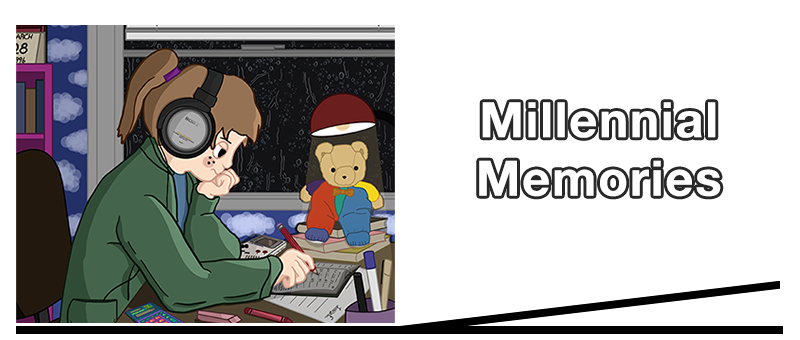
Millennials grew up in a very unique time. Yes, every generation can say that, because the world has changed so rapidly in the last two centuries. This one, however, was raised in one decade that was like a crossroads in the eye of a hurricane. Post Cold War optimism was palpable. The Jesus Jones’ song Right Here Right Now summed up the moment best, and might as well have carried, Americans at least, through the 90s.
No, it wasn’t all great. We had Waco, and the Oklahoma City bombing. However, it’s up to the reader to decide if these events even occurred in the story; they’re never mentioned, and while in the real world kids were aware that “something bad happened,” such things were not a main concern. We were more interested in sneaking Pogs into school, collecting Pokémon cards or trading them on our Game Boys, going to the latest summer blockbuster movies, being the first kid in our social groups to log into AOL, learning how to burn early pirated music onto CDs, taking care of our Tamagotchis, and meeting up with the gang on our bikes for a lazy summer hangout sesh.
On the other side of one of those crossroad streets was the rise of the internet. What had before been lurking in the background of society and mostly relegated to universities, the government, and “fringe nerds” who posted on primitive BBS sites was growing under the surface, ready to pop off come ’96 or ’97. Barring an apocalyptic event, the internet is now here to stay. Gen Z kids don’t remember a time before it, and it’s gotten so ubiquitous that no one gives a second thought to picking up their smart phone to post a status update, or saying hi in their favorite Discord server. If you’re not terminally online, you might at least spend the day hopping on and off again without a second thought.
In the beginning, we relied on dialup modems that made annoying sounds which told a telephone what to do. They would tie up the line in an era where few were able to afford a cellphone or its plans just yet, and if your folks had to make a call, simply picking up a receiver elsewhere in the house would disconnect you. Except for a few instances where Wes uses the early internet to get some information, keep track of equipment recordings, or Jace takes a peek at an AOL chatroom or bulletin board, it’s mostly ignored, since most kids in 1995 had no idea it existed. Even those that knew about it mainly considered its use as being for emails and fax machines. A 1994 story arc from the Ghostwriter TV show was one of the first instances of kids’ television bringing awareness of this “world wide web thing” to the youth.
And yet, by the time The 90’s Movie partially takes place in 1998, the last vestiges of the 1980s have faded away and the Wild West era of the internet has taken off. Wes will even run his own message board soon, and he and Jared are sharing GameShark codes on others. It’s a shiny new thing, and its potential has not yet even begun to feel realized. There’s still no social media yet (thankfully, some might say), so the optimism of the 90s remains; now there’s just a fun way to spread it online to all the people you know. And Zach Pentino’s AIM buddy list grows and grows.
Wes and I share a birth month and year. I did this so our experiences could closely align, despite having grown up on different coasts—and to simply make it easier on myself when it came to matching up release dates and the topic of the day among his friends. I also know what it would’ve been like when those halcyon days finally came to an end in 2003, if they actually lasted that long.
Many of his friends go their separate ways to start their own lives. Only one stays local in the end, and by then it isn’t exactly the one he would’ve chosen. Similar to myself, Wes stayed in his childhood town when he went to college, and after graduating, he is directionless in a world that feels so very different than the 90s, which also seems to be “going bad.” Is that just a consequence of being an adult and seeing things for what they are, or the times, or both? Whatever the case, his nostalgic pangs are certainly beginning by this point. And in just a few short years, his nephew Jace will be born.
My generation is having kids already?! Is what he would have thought at one point. For him, this instantly means that the influence of 90s kids from all over is being lost. They’re no longer the young ones, absorbing the world like sponges.
Careers begin, responsibilities take over, adulting happens, and concerns change. It doesn’t take long until Wes is glamorizing his past and seeing how it all went down in a new light. He cherishes it more each day, soon to a fault. Five years feels short now, but back then they felt like forever. Five short years of perfection, where friendships were endless, when every new movie and game coming down the pipe had rumors and a countdown attached. Over time, he slows down his game purchasing. He starts watching streamers instead. Hobbies he once enjoyed, now begin to feel like a chore; an obligation to his younger self who still felt excitement about those “shiny new things.”
Wes has a good memory, but he dwells on the things that went less than perfectly. The arguments, the less than optimal days, the stuff he wishes he had done instead of staying at home unlocking fighters in Super Smash Brothers. That good memory is both a curse and a blessing. On one hand, he takes over as the group’s archivist and keeps their history together alive, giving purpose to their friendships that were both planned or developed randomly and organically. On the other, he holds onto some memories too tightly, and a few even begin to rot into negative ones. Yet, if he could, he’d go back in time just to tell his kid self to, “enjoy this moment more.” Even though he did, and no longer realizes it.
If he had gotten a few more lessons from his childhood teenage guru Vanni Patile, what might have been different? Would he have handled aging any better? Did his past mean anything beyond shaping his character? And why does everything feel wrong and hollow now? He’s on social media because he feels he needs to be, but the answers aren’t there; only a sea of other people his age, bumbling around in a daze, wondering where the good times went.
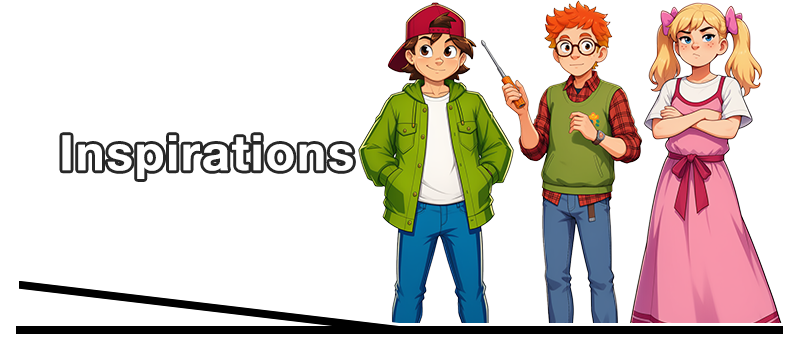
Because the series is partly about pop culture, how it influences personalities, and what we remember and enjoy from childhood, the total number of existing creative works that inspired or influenced the story in some manner are too numerous to count. But there are definitely some heavy hitters, and shows that come close enough to nearly exist within the wider 90’s-verse itself. The 90’s Kid is even written like an animated TV series, with every chapter being the same length. On the official site and in printed format, they’re 22 pages each. Similar to how shows, at least in the 90s, were often 22 minutes long—excluding intros, commercials, and end credits. Remember when those used to play in full?
Throughout the history of kids’ shows, sci-fi, fantasy, and comic books adaptations were all popular, but so were the closer-to-reality stories that reached into something relatable yet idealized, and dipped into the magical realism goop we talked about earlier. Disney’s Recess and Nickelodeon’s Hey Arnold! are both from the latter half of the 1990s, and are the two biggest inspirations behind my show that never was, at least in the ways of atmosphere and how characters interact with and see each other. One primarily focused on the fun and coming-of-age moments that were centered around, but not seen exclusively at, the elementary school playground. There are social hierarchies, legends of classes past, and an eventual passage of time—a limited special season saw the kids go from fourth to fifth grade. There’s even a secret club run by the popular girls, though it’s beyond the scope of my story’s level of realism.
The main kids, TJ the all-around good guy, Gretchen the lovable nerd, Spinelli the tough girl, Gus the shrimpy new boy at school, Vince the sports kid, and Mikey the big lovable guy who can sing and recite poetry, form a colorful cast with vivid personalities. The show managed a large population of students, some of which were one-off characters, but each of them was quite memorable.
And in the other mentioned series, Arnold gradually helps his classmates one by one, with some of them only getting noticeable screen time in a single episode. Just like Jace ends up doing. Its characters are a little more nuanced and aren’t as defined by their interests, and features best friend Gerald, borderline bully Harold, sometimes-schemers Sid and Stinky (really), down-on-his luck Eugene, and of course, Arnold’s secret mega-admirer Helga and her sidekick Phoebe.
Both of these shows have expansive casts that make their world feel alive, without being overwhelming. Which is something I’ve tried to emulate.
There are lesser influences, including Rugrats, which shows the world from the perspective of babies who talk to each other, and was made by some of the people that went on to create Recess. My kids are, in fact, not babies (even if it’s arguable sometimes with Wes), but what I always liked about it in my youth was how it explored basic concepts and life’s smallest things from a different perspective. And while this seems like an odd compliment, something that always stood out to me was how well the animators maintained consistency in their location visits, especially the houses of all the characters, with each one being seen often across the episodes during play dates. I can still map out the homes where Tommy and Angelica grew up in my head.
Doug was the other of the two original Nicktoons about ordinary people, and chronicled the titular character’s later childhood going into adolescence where sometimes painful lessons are learned, with much of those moments happening at school or around town. The cast is colorful (literally) and down-to-earth, aside from Doug’s hyper-intelligent dog. Although it doesn’t quite have the same lightheartedness and whimsy as the previous shows, the times where we see inside his imagination are fun, if not born from overblown worries.
There are two live-action shows worth a quick mention. The Adventures of Pete and Pete is a cult classic about two brothers growing up in a small town where something might be in the drinking water and everyone’s a little larger than life, and Clarissa Explains it All is basically what formed the sage character of Vanni. Like Clarissa, she’s cool and confident, has things figured out, and has a sometimes annoying younger brother.
Find a way to watch some of these shows yourself if you’ve never seen them, and you’ll pick up on the style of storytelling I’m going after. The big difference is, in The 90’s Kid, my characters do age, and swearing and adult situations exist within the setting of a realistic city. Imagine if someone from one of these shows grew up and got very cynical or nostalgic. More modern examples of these types of stories include Clarence and Craig of the Creek.
Finally, there are a couple video games worthy of a mention, as well. The story structure and stakes, perhaps surprisingly because it won’t seem that way at first, are similar to the RPG legend Chrono Trigger. Released in 1995, the game takes players across eras in a fantasy world from a modern age, to a devastated future, the prehistoric past, and even a floating city that exists during an ice age, as our heroes try to stop a planetary parasite from devouring the world’s energy. The foes are mostly humans tempted by the creature or those trying to exploit its power. Time periods are revisited repeatedly, and eventually changes from the past affect the future.
And if ever there was a game that inspired how I write my characters and see the setting of a contemporary city as a place where RPGs can happen, it would be Earthbound, the second title in the Mother trilogy. It was also released around the same time, and is about a planet-destroying entity that’s warping the minds of animals and people across a world of towns and back roads. I could easily imagine The 90’s Kid retold as a video game in its top-down, semi-isometric style, and its characters are both lovable and wacky. Its situations and dialogue, however, are low on irony and full of genuine emotion.
Wes no doubt replayed and rewatched these games and shows many times across his life. They influenced him just as they inspired the story itself.
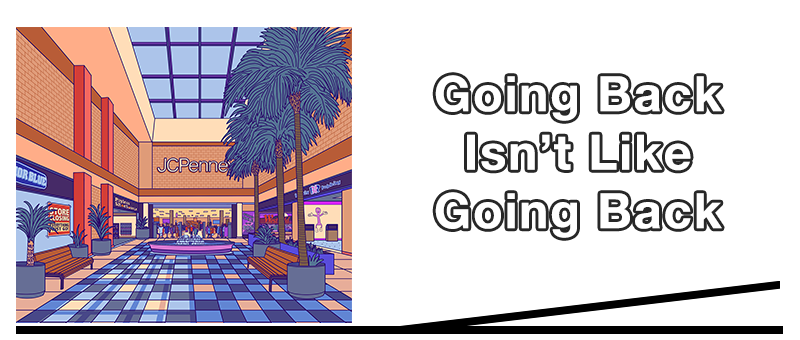
Something Wes actually learned during his first solo trip into the past, is that traveling back in time to your favorite year (purely by some cosmic form of good luck) is not the same as returning to your childhood. And not only due to logistical challenges. Good luck sneaking into your fifth grade classroom and the playground, buddy! Though, to be fair, he does manage the former during a “bring a parent to school” day. His childhood friends’ houses are also off-limits. That basically limits his options to public places, or restaurants and venues, and you know he’ll prioritize all the locales that have closed over the years; the longer ago it vanished, the higher it is on the list.
The past will still look, sound, feel, and even smell different. Cars from the 1970s will be much more plentiful on the roads. More sidewalks will be in the old style, where they’re closer to the road and not as elevated. The sensory experience is still there, locked in time and determined by the environment. But the childhood wonder is not, nor can it return. Everything about the world, and people themselves, hold mystical qualities when you’re a kid still learning the rules about life. Everything is new once, but the excitement fades.
And partly because memories don’t feel as special and big ones aren’t made as often when you’re adult, time feels sped up. Days linger when you’re young, and weeks can feel like months. Wes can’t go back, and even if he could be a kid again, it wouldn’t be the same. The random chaos of discovery shared among a group is gone. The rumors are quashed before they can organically form. Ideas and concerns about the future hold no power.
In the upcoming second series, Another 90’s Kid, Maisy Wilkins returns to the past, too. But as it’s mental-based travel, she’ll get to inhabit her body instead, and jump around time at her will. Fun! And closer to “going back,” but it’s still not nearly the same. Taking knowledge with you changes the experience. After the rock covering the cave is moved, you can put it back, but you’ll never forget the sight of what was outside and beyond the comfort of naive childhood.
Wes can accept all this. It’s still more than he ever remotely imagined could possibly happen to him. But even so, it leaves him clinging to some perfect version of “returning” that can’t exist. He’s close to something, he doesn’t know what, and he can’t tolerate letting it slip from his grasp even a little bit.
Maybe, he thinks, he’ll stay in the past. Perhaps repeating his visit over and over again. If he can’t get any closer to reliving those halcyon days, what if there’s a chance to turn his future into something he would want to go back to?
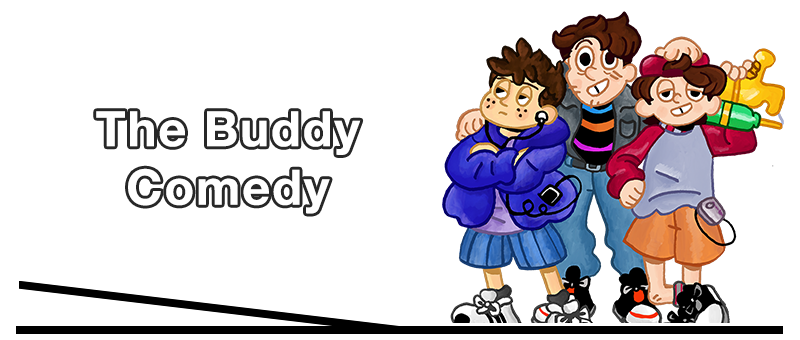
We open and stick with Jace’s perspective for a while, as he is the one having the “new experience,” which is usually the kind of thing stories focus on at first. On a summer morning like any other, he’s lazily eating his cereal, before suddenly finding himself whisked away on a fake camping trip that Lucy, his mom, agrees to because Jace has some problems of his own and could really benefit from getting out of the house. Wes is the instigator. He seems different, more excitable than he’s been in years, like he just got back from a long retreat.
Following a day of preparations, downloading files onto his iPad, and secretly priming Jace for a time travel adventure by binge-watching all of Back to the Future, Wes goes ahead and shoves his troubled fifth-grade graduate nephew through a time portal that exists not beyond his kitchen pantry door, but oddly inside of it. After an action sequence that will soon feel out of place in the series, but does have a purpose in establishing that danger exists, Jace finds himself in 1995. Kidnapped and brought to, one might say.
Wes has long-term plans, but until Jace can start going to school and interacting with his old childhood friends, they’ll have to bide their time and learn to get along. Wes can’t change the settings on the door and input a different arrival date, and even if he could, it’s not certain if he’d want to skip what was left of summer, anyway. Even the arrival date of July 18th will be important in relation to two big events down the line.
Because it’s just the two of them at first, conflict has to come from within and between them. While Wes tries to give lessons, Jace scoffs and asks “what’s so great about all of that, anyway?” He complains as his uncle shows him places and establishes some guidelines for living in the past. Wes doesn’t want to prolong the “boring” things, so he gets the time travel theories out of the way early, and before long gives Jace something of a therapy session; not as a professional himself like his half-sister, but just as someone who really knows how social behavior works, especially among kids.
That doesn’t do much to calm down Jace, but it does get the ball rolling. He had a rough fifth grade, and came to the past after assuming he lost all his friends for good. He’s jaded, and has heard enough about Wes’ past over the years to already to be tired of it, so time traveling has arrived in equal parts annoying and mildly interesting. He more or less plays the straight guy to Wes’ antics, but don’t let the latter deceive you; he’s harboring a lot of regret and resentment of his own, and actually has a bit of a vindictive side when it comes to threats to his plans. Not that he’s great at those, either. Being a pretty ordinary guy, Wes can be bumbling and often earns those snarky comments from Jace.
The slower early days, meant to evoke the feeling of a tutorial level or carefree summer afternoons, won’t last. After things culminate in a visit to King Arcade Amusement Park, the rest of it breezes by in a blur, and before you know it, Jace is going to school and the cast of the often-seen grows rapidly.
The two are seen alone together less often from then on, making the early, simple chapters special in their own way. But even after they start seeing eye-to-eye and moving in sync, that simmering tension is always there. After all, Wes is a self-centered jerk who dragged Jace to the past to fulfill his own desires; that won’t change. But will he redeem himself, and can he find what’s actually important in life? What are the things he really needs to fix?
Jace does surprise Wes sometimes with his wit, and Wes acknowledges that he has a pretty smart nephew. Lucy raised him right, and if nothing else, Wes can emphasize with the kid having divorced parents and a father who isn’t there for him enough. They have more in common than they think; perhaps once Jace becomes old enough to feel nostalgia himself, their bond will truly solidify.
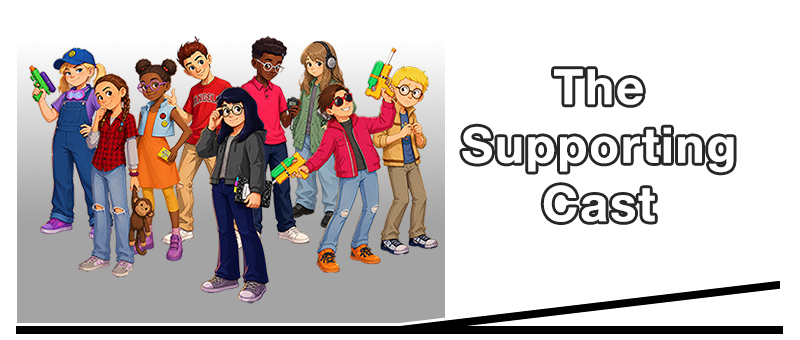
Here’s the big reason I always recommend reviewers try to at least get to Chapter 8. Stopping before then doesn’t give enough of an idea of the story’s scope, and will leave them with only snippets of the main cast—assuming they even at least get to Chapter 3. The fun parts of our adventure happen when the group of 90s friends comes together and banter as old buddies. The other kids both on and off the playground are the sprinkles and pepperoni on top of a hybrid pizza-cupcake.
Notably, Wes barely talks about his beloved childhood friends before he “has” to at the introduction of the Bullet Water game (spy session). Whether he was simply holding back until that moment or had genuine reluctance is up to the reader. Either way, the extended action sequence gives them all a chance to show off their personalities, and everything changes once Jace is in school as the mysterious but cool Jason Connor, where he has to get in with the group— and manage his interactions by striking a balance of what to say, do, and possibly change. Appropriately, he’s one of the quieter kids of the group, as everything he says is “loud;” his words did not exist in the original timeline.
Colin is Wes’ shrimpy best friend, who he’s known since preschool. As Wes’ righthand man, he usually goes along with whatever he does and seldom questions his intentions or actions. Jared is the “guard dog” of the group, always alert for bullies that want to start something with his pals, while keeping posers and fakers out. He’s inward-facing, as well, and isn’t afraid to call out ridiculous or impractical ideas; something that can get him called a buzzkill.
Sadie is the resident self-assured girl who carved out her own place in the group, and got the boys to remove that “no girls” sign on Colin’s treehouse. She likes rap battles and coming up with unique strategies in tactical suburban combat games. Her friend Celeste is even tougher and more outdoorsy, though she lives in a different part of the neighborhood, in another school district, and isn’t always around. Celly also has something of an ancient history with Wes.
Arthur is the archivist and timekeeper, immortalizing precious moments with his cameras and keeping everyone on schedule. His twin sister Ash, who Wes is even more hesitant to talk about, is bubbly yet feisty, and best friends with Sadie growing up.
And then there’s Zach. The “coolest kid” at Desert Tree Elementary. Nothing seems to bother him, and sometimes he doesn’t notice if the things he does or says bother others, either. But they’re glad to have him in the group, along with his social rep. Charlie Pippin, the legendary mentor to both Zach and Wes, got kicked out of school in fourth grade, but his spirit remains, and he’s talked about frequently.
Not everyone can have a social circle. Like Millie, who spies on her classmates, and has composition notebooks full of information she shares with no one. Observant but having no friends to hang out with, she may prove to be an early adversary for our time travelers.
Gradually, all of Ms. Porter’s fifth grade class is introduced. We have a sci-fi nerd, a girl who really wants a cat, and a school merchant and bodyguard for the playground’s secret dumpster club. And when Jace makes it his mission to find some way to help all of them, we get peeks into their lives, too, and the niches they fill.
There’s also Jace’s mom, shy little Lucy, jaded just like Jace has become. But she’s back in fourth grade and should be easily avoidable. Most of the time.
Sleepovers are had at most of the main cast’s homes, providing more down moments for fun character development. Introductions come steadily. And by Season 3, some kids from other classes, and even other schools, get a moment in the spotlight. Where have they been hiding all this time?
To represent the coming of age and passage of time aspects, all of the mains are seen as adults, too, so you can see how they turned out. It takes a while to get to them all, but that just gives readers something to look forward to. I’d like these buddies to be your buddies, too. Maybe a few of them remind you of a friend you once had? Do you still keep in contact, or did you one day say goodbye to them for the final time without realizing it?
It’s unusual, and perhaps a little unrealistic that Wes manages to stay in touch with all of his childhood pals, but it goes to show what they meant to each other. That, or Wes just holds onto the past so obsessively that he’s become the super glue holding everyone together, no matter what. And on that note…
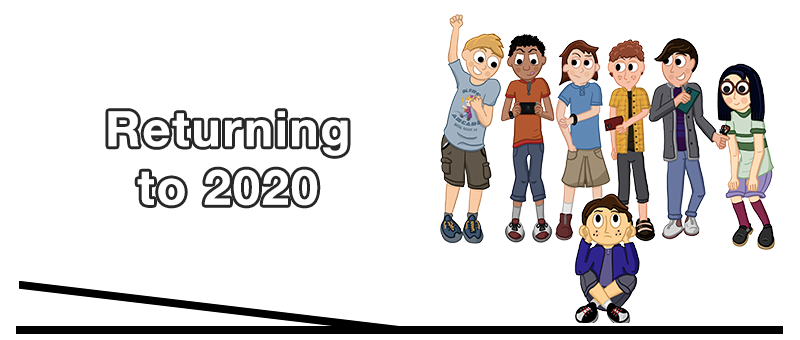
I’ll keep this section as light and spoiler-free as possible, but you may still want to skip it if you’d like to fully experience a big turn of events. There does come a point when we dip back into 2020, but I won’t get into the details.
This change-up lasts a good handful of chapters, and gives us the chance to see many of Wes’ friends, grown up. But also Jace’s friends, too. Are they still angry at him? Were they truly ever? That’s up to you to discover.
What’s worth talking about briefly is the generational divide, seeing what has changed or stayed the same, and how Jace’s modern-day friends are reliving the past due to the influence of their parents. Having grown up with smart phones, online gaming, social media, and (other) existential threats, these kids are in search of something that feels real and wholesome. They may be stuck being zoomers, but they’ve been raised to be well-aware that none of what they’re living amidst was normal or commonplace once.
Growing up in Desert Tree like most of their folks did, where “the whispers of generations past are on the warm winds and sprinkler mist,” as Wes might put it, Jace’s friends consist of his bestie Laurie, who is sort of the “big sister” figure of the group and arguably in charge; she’s at least the moral compass. Chad and Austin are the rough and tumble kids and thick as thieves, both into schemes and wrestling. Jamie is the nerd in a time where nerds are considered cool, too, and Toby is the Zach of his generation, who tracks trends and participates in events reluctantly. There’s also Emiko, the cute Japanese girl of the group who can be a little absentminded.
Going to the same school, mall, and theme park as Wes’ gang did, they tread on familiar, aged ground to provide commentary and act as observers from which we see how years going by changes everything. They no longer live in a world that’s like a Saturday morning cartoon. There are so many more options now. More channels, streamers, YouTube, short form videos, and a constant drip of mobile game slop. Those times when kids could be united by common interests like basic cable and once-a-month classic game releases, the campfires of their age, are over. Interests diverge more easily.
And yet, they try their hardest to hold onto each other, just like Wes’ group did. They weren’t given tablets as babies to be kept entertained, and it shows. Maybe there’s hope for them yet.
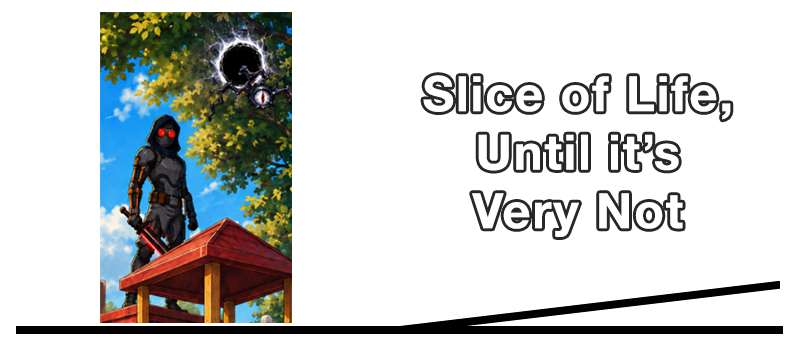
Life has its challenges. Sometimes you’re hit by a huge struggle that you weren’t preparing for, and you have to adapt on the fly. Other times, someone you perceive as an antagonist to your very existence shows up and challenges you to a boss fight. That actually happens a few times in the series.
Wes is ignorant to the true scale of what he’s trying to accomplish. Stalked, hunted, investigated, and observed by multiple entities through his trip, which may or may not be working together, there are instances when his slice of life carefree fun is disturbed in a big way. These moments don’t happen often, and don’t truly escalate into existential threats until Season 3, but even early on there are some struggles against unexpected obstacles and enemies. If life was a video game, he’d be able to conquer these challenges easily. But he’s just a guy, with a kid to protect. The best thing he has are his talents in creative problem-solving.
Without ruining the surprise, there’s an underlying tension beneath the weekend-vibes sun-soaked atmosphere when it comes to the emergence of these threats, and any science fiction fan should have a blast seeing Wes and Jace contend with the forces trying to put an end to their adventure. For a series about the everyday, childhood friends, and memory lane trips like this one, the action scenes are surprisingly intense, and hit harder because of how they exist relative to the regular tone. And that’ll just make you want to see how our heroes pull through even more.
No one said time travel and changing both the past and future were going to be easy endeavors. Wes is slow to grow and change his ways, so every so often he needs a wakeup call. A very loud, aggressive one.
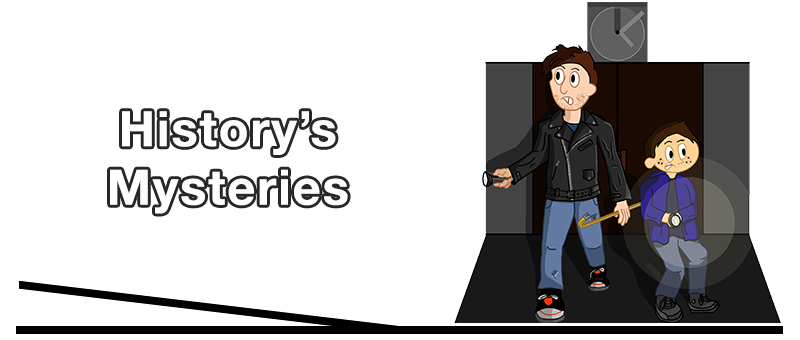
Wes grew up with urban legends and scary stories on the playground or at sleepovers, often invented on the spot. The generation thrived on sharing tales of the unknown and all that could not be confirmed. In a time when no one could simply take out a smartphone and confirm a fact or purported incident in seconds, rumors about one another, people in the wider city, lost TV episodes, or obscure video game easter eggs and cheat codes could persist for years. But Mew is definitely under the truck!
While video game magazines were getting away with April Fool’s jokes and new cheat codes in the latest Nintendo Power issue made someone’s day, he who could tell the best story, or was a keeper of local history, wielded great power. Were all of Charlie Pippin’s exploits true? How inflated were the real tales? Wes was likely a fairly gullible child growing up, and he doubtlessly carried some falsehoods or skewed perspectives about his friends’ pasts together all the way to adulthood, where he began spreading old debunked or misconstrued stories to Jace.
Listing more Wes faults aside, if he was as into hearsay and anomalies as much as he used to be, he may have taken better notice of the peculiar things happening around him. He was never alone, and his pantry door hosting a time portal was no random occurrence. Everything was set up or happened for a reason; he just can’t see it yet. There exists an organization that seeks to keep history from being altered, but they’re always just beyond the temporal veil. A ninja in dark gray armor makes their presence known to Jace when they want to, and has surely been keeping an eye on him much more than he realizes. Strange eyes made of liquid metal pop out of portals and stare at or even threaten Wes, and while it’s disturbing, he can do little more than try to avoid them.
Something is silently screaming at the two to return home, telling them they don’t belong here, but it’s all only still surface level. They may think there’s all the time in the world to hang out and see movies, but forces are converging on their date and location, and the more they alter, the more aggressive those forces become. More than that, Wes has no idea just how much of a tangled knot he’s sitting on while being in some twisted version of the past, since he can’t see the fifth-dimensional threads. It all looks calm, normal, and peaceful, just like he remembered, but as he and Jace head into some very important dates and events, something in that taut thread is going to snap.
Who was Professor Corathine? Why did going through the door cause spacetime glitches, like returning picked up objects to their origin points? How far can they travel out of Royal Valley? What was Charlie’s deal, and the truth behind the incident that got him kicked out of school? Can Millie be reasoned with, what’s the Time Ninja’s deal, and for that matter, what was Mr. Colton’s deal when it came to raising Wes?
All these questions and many more play a part, and will, in time, be answered. But some are more central than others, like this big one: Why was King Arcade built over an old airbase that suddenly closed for unexplained reasons, and what might still be lurking underneath its rides and mascots?
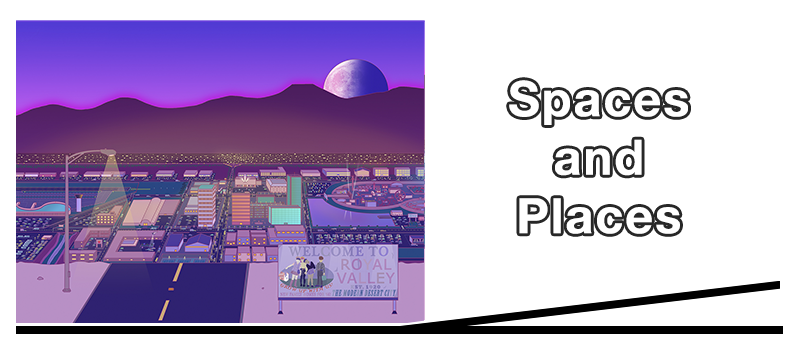
Locations are almost as important to Wes as people. Many smaller, less important places are skipped over entirely. If a “set” is visited, it’s because it holds some importance, either to the plot, or Wes’ history. If it’s visited more than once, it’s really important.
A quick study of the map of Royal Valley will give you a good idea of how even a story that, for the most part, happens in a single medium-sized city can have many areas to visit. The location art of repeatedly-seen anchor locations further share the corners of the world that stood out in Wes’ mind, and could serve as backdrops for a (purely) theoretical visual novel adaptation.
Some locations have closed over Wes’ life. A few only existed as vague, distant memories, and now he has a chance to revisit them and confirm that they did, in fact, exist. Many remain, and are places Jace is already aware of. Even just a year-long tour has examples of the changing times, and proves that snapshots of Royal Valley exist for a day each. Cities constantly churn and history is built upon. A certain restaurant and a particular business might’ve only coexisted as open venues for a single day, and trying to map out what currently exists and what does not would be chaotic.
Since he was young, Wes absorbed the sights, sounds, and feels of a place each time he entered it; indoor spaces especially. These memories lingered and persisted in his mind, their meaning morphing even as they remain unchanged. As his last visits to some places grow more distant, to him they become dark, cold, and empty, regardless if they’re still open or not. If he had a magic key, he’d show Jace everything there is to see in town. If some utility closet at school has no special meaning, then maybe that one gift shop at King Arcade does, or somebody’s kitchen in a house he never visited. There’s the potential to see something precious anywhere and everywhere.
King Arcade is the centerpiece. It’s changed over the years, but it’s always recognizable; a trusty, timeless haven of fun, joy, and expensive snacks. Elsewhere, the Mega 18 theater opens its doors while Wes and Jace are in town, supplanting the good old Queen theater downtown. Castle Hill Overlook gives them a good view of a place Wes has recreated in city building sims repeatedly over the years. There is a mini-golf course, a skating rink, a video rental store, fast-food restaurants, Wes’ beloved childhood Toys ‘R’ Us where he submitted his golden ticket that got him into the Super Toy Run in 1996, which would close much later in life and make him think upon all that he’s lost. There’s a visit to a long-gone K-Mart where some of his first memories were made. And, of course, the mall. That glorious temple of commerce full of too many good memories to count, and where the local arcade is hosted. There’s even a two-chapter detour into summer camp.
For Wes, Royal Valley is a living, breathing thing; a playground that must be preserved at all costs. When that ideal isn’t possible, he’ll mythologize, or eulogize. Time travel has turned the city into a living museum, and for him, it has no closing time. He’ll go where he wants, when he wants, if it means breathing its local air again. Every brick holds a longing he can never quite describe, and the walls have absorbed the memories of all who lived and worked within them.
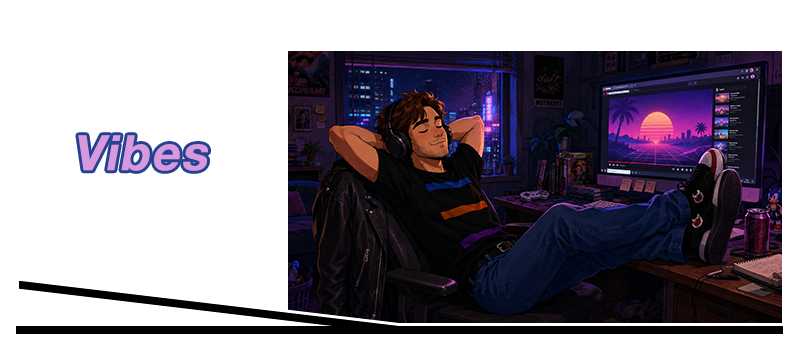
The 90’s Kid covers a lot of ground, so it has to move fast. As a light novel on the heavier side, it usually can’t stay in a place more than a few pages, so the reader will breeze through visits to the areas just described. Those places and their feelings won’t linger for us like they do for Wes, but he does still “let it all in,” and reminisce as much as always.
As a guy trying to hang onto the past, Wes will look at a thing in all sorts of new ways in order to preserve its existence in a different perspective. These “vibes,” as they were, are not isolated to his worldview. In fact, you could say that he has a wide network of support on the internet.
The concept of liminal spaces has been trending for quite a few years, not only among Gen Z but also among Millennials, perhaps especially (where’s it’s often mixed with analog horror). While big, empty rooms don’t appear often in the series itself, Wes is the kind of person that would spend hours on the internet browsing such images, because he “gets it.” They match up with how he perceives lost, old rooms in his mind. Forgotten places make him feel the creeping dread he can’t shake that he’s being forgotten himself. And it’s no wonder that he’s gotten into vaporwave music when it’s usually paired up with visuals of photos of liminal spaces, sometimes that never existed because they were created in Photoshop or with AI.
This form of music, which he’d enjoy alongside synthwave, attempts to recreate a mostly early 90s atmosphere into audio form, with accompanying visuals all about “aesthetic.” The genre began by slowing down and distorting tunes from the 80s and early 90s into dreamy but recognizable beats that share the feeling of time lost to history and fading childhoods, but eventually evolved into more purely original music that “feels” like walking through a memory in a building that never truly existed. Alongside all of this is the almost retro-futuristic promise of an evolved analog world that never was. It’s not shocking that Wes would be into it, or make some himself had he any musical talent.
Vaporwave is also known for its sunset-like colors, particularly in pinks that call out to the last minutes of a day when the world is coated in such hues. By making that brief moment between light and dark last longer than normal, the promise of “holding onto something until the very end” is touched upon. Wes sees himself in a perpetual sunset of his own life, trapped between the daylight of youth and the twilight of adulthood. He knows the good days are behind him, but he also can’t move on. Maybe in his mind, versions of his best memories take place at dusk, too.
The liminal spaces trend is also about sharing photographs of places built in a different, older time, when architectural and design standards were different. Wes prefers buildings created before every decision felt like it was made in an executive’s office and every element of a room seemingly made in an assembly factory. He grew up in a 1960 house, and loves those imperfections and little bits of character older structure have, that seem to absorb history rather than sterilize it. Fast-food restaurants becoming dull gray boxes that all look the same? You know he hated that development.
These visual concepts don’t really translate to text, but understanding them means better comprehending Wes’ melancholy. He’s reached a point where he shares certain philosophies of thinking with others, with kenopsia being one of his favorites—the absence of life where it should exist in great numbers, or the feeling of a smaller, more intimate space like his house where love was felt and memories were bountiful. Which now sits empty.
By keeping busy and coming up with new tasks for himself, even if they simply include teaching Jace something, he can run from all these encroaching feelings and not dwell on what he can’t get back for too long. But the thoughts will always be waiting to gnaw at him as he lies awake in bed.
The original series’ artwork was heavily inspired by vaporwave aesthetics, so the views of the city, theme park, and school were all captured at this time of day. It’s also mostly written with such music in the background. Synthwave for action scenes. And boss fights have certain game music attached in my mind, too. Just hang on a bit longer, Wes. Wait for something to happen. It’ll get better.
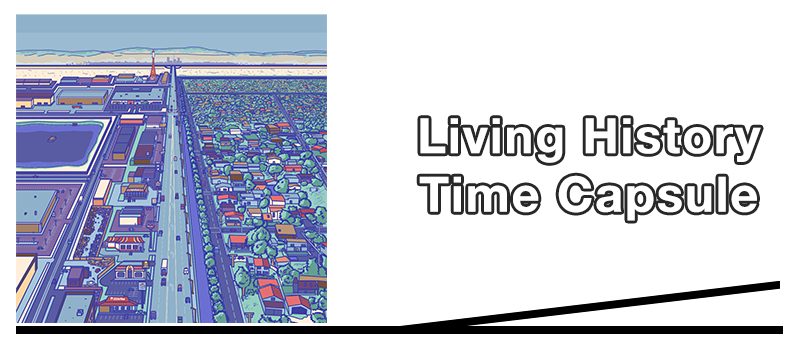
Wes compares coming back to Royal Valley in the past to seeing a time capsule, and it is a huge, intricately complex one. For him, the experience is similar to watching The Truman Show, not because it’s reality TV being broadcast to the world (as far as he knows) but because it feels like watching a contained area full of actors repeating the same motions for a third time. There aren’t as many cameras, but if Wes had a chance to be an omniscient being and spy on the whole city, he’d take it. Not to be a creep, but… Well, you should know by this point. Once again, it’s a museum.
Everything about the past is special. Everything deserves to be immortalized, even where random people stood around at any given time. He thinks about the countless stories that were missed because he can’t be everywhere at once. And it’s true: 80,000 people interacting with each other every single day equates to a mind-bogglingly large amount of stories that will never be seen.
But, Wes, my man. Come on. Aren’t you going a little overboard here? Given all the examples I’ve cited so far, it’s clear that your nostalgia levels know no deepest depths. With unlimited wealth and time travel at your disposal, you’d turn 1990s Royal Valley into a living theatric play like in Synecdoche, New York (go watch it if you’re vibing with Wes). Can’t you ease up, accept that you were just one kid living one life in one decade, and see how special the experience was because of how fleeting and singular it had been?
No, you won’t, will you? Because it’s all you think you have left. There’s nothing for you in the future, you’re cynical and tired in the present, and the past, in your eyes, is a shining beacon of hope on a pedestal. Except hope doesn’t work backwards, Mr. Colton. You can’t bring back those glory days. Partake in the art that came from it, look at the photo albums, tell your nephew what life was like when you were a kid. But for your own sake, wake up from this dream.
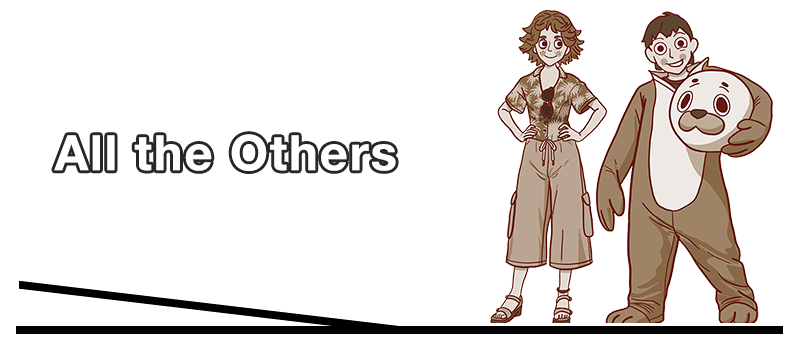
Fortunately, Wes isn’t a solipsistic brain in a jar thinking about his past on repeat, and Jace doesn’t have the only other perspective, nor is he the only one who is reasonably normal when thinking about the past, comparatively.
Wes has a lot to talk about and a ton of opinions, but he can’t carry every single one there is to be had on his back. Through others, we can see more experiences in and around Royal Valley, within a key moment of their lives. Sometimes they also have thoughts on pop culture. Junkie that he is, Wes probably knows about all of it as well, but it’s nice to get a break from his yapping now and then and let another person take the wheel.
Side stories, which I only began writing after the second novella-sized follow-up “movie” was done, are equal in length to the other chapters and give us a chance to see otherwise lost stories that have echoes reaching into the main events. Everyone in Wes’ friend group will get one and appear in each other’s stories as supporting cast, giving me a chance to show how they’d react to certain events that didn’t make it into the main series.
Some of the stars in these tales will come as a surprise, as will the stories themselves, as not all of them get mentioned or are even that relevant to the larger arcs. Plus, they’re self-contained, so if you like short stories in a three act structure, they make for fun (usually) quick reads that expand the universe. Others are so important that they could’ve easily been season chapters.
While introducing some new side-side characters, in these extras you’ll get to stop in and see a cruise ship, a tropical resort, Japan, space (seriously), and a fictional small town out in the desert. And Wes winning the Super Toy Run. A helpful table of contents shows you the best times to read each story if you want a little getaway. Or, save them all for the end.
It can’t all be about Wes, can it?

The core of the story is not actually time travel itself. We have some fun with it, and the shenanigans you want to see in the genre begin to pick up in the second half of Season 2, but it’s really just a car we travel in with Wes so he can take us all on a nostalgic journey through his living museum, where he yaps to us about TV shows or buildings in Las Vegas.
Everyone feels some degree of nostalgia and longing. Wes just happens to be at the top of a bell curve. He was both the ultimate 90s kids for a moment in time in his eyes, and then spent the rest of his life hoping to somehow be one again—or, if nothing else, at least seeking validation that he won the lottery and got to live in what he considers the “best era in human history.” While his friends loved it, too, they knew how to move on. But letting go is different, and not everyone needs to do that as long as it’s not at the expense of their future.
Wes, at one point, describes the essential feeling of his past—not the location or memories themselves—as a room where a dusty CD player is under a bare incandescent lightbulb. This may be the place he first retreats to when he’s feeling down and dives into his memories; it’s an origin point, 0.0.0 on the game map coordinates, White Space in Omori, a starter shack in Minecraft, etc. From there, he can open the door to any one of the many happy memories he refuses to let drift off into the aether. What this lightbulb and piece of audio equipment means is not for us to know. It signifies Wes’ heart, and is untouchable.
What he fails to realize is how strong the dose has become. Everything should be taken in moderation, lest it turn to poison, and he’s at the precipice where that poison will cause irreparable harm and turn him into a bitter Scrooge-like character. But, perhaps by fate, he’s offered a chance to dive headfirst into his wildest dreams of actually getting to go back. Could the adventure bring him some clarity, and get him to realize his childhood wasn’t quite as perfect as he remembered while also affirming that it did happen?
And what are the odds that one of the most nostalgic guys in the world even gets the chance to go back in the first place? What lined up to make that happen? Are cosmic forces playing a joke on him, or was this all engineered?
For those answers, you’ll have to read the story, and as he would say, “Hurry up and come with me! The portal could close any second!”
And if you read all this after the story, then you already know. By all means, come back one day and reread it to see what you missed or forgot.
Reruns are safe and special, after all.